 MEDINDIA
 English
 हिन्दी
 Español
 français
 中文
中文
 Email
Email
- Water Intake, Water Balance, and the Elusive Daily Water Requirement - (https://www.ncbi.nlm.nih.gov/pmc/articles/PMC6315424/)
- Hydration, water intake and beverage consumption habits among adults - (https://onlinelibrary.wiley.com/doi/full/10.1111/j.1467-3010.2012.01976.x)
- Problem: Thirst, drinking behavior, and involuntary dehydration. - (https://pubmed.ncbi.nlm.nih.gov/1602937/)
- Physiology of the Urge to Drink and Problems of Water Lack. - (https://www.ncbi.nlm.nih.gov/pmc/articles/PMC1869230/)
- The Utility of Thirst as a Measure of Hydration Status Following Exercise-Induced Dehydration. - (https://pubmed.ncbi.nlm.nih.gov/31703247/)
- Water as an essential nutrient: the physiological basis of hydration. - (https://doi.org/10.1038/ejcn.2009.111)
- How much water do we really need to drink? - (https://pubmed.ncbi.nlm.nih.gov/20356431/)
- Climate Change and the Kidney - (https://pubmed.ncbi.nlm.nih.gov/31203298/)
- Water, Hydration and Health - (https://www.ncbi.nlm.nih.gov/pmc/articles/PMC2908954/)
- No evidence of dehydration with moderate daily coffee intake: a counterbalanced cross-over study in a free-living population. - (https://pubmed.ncbi.nlm.nih.gov/24416202/)
- Effect of Pre-meal Water Consumption on Energy Intake and Satiety in Non-obese Young Adults. - (https://pubmed.ncbi.nlm.nih.gov/30406058/)
- Increased Hydration Can Be Associated with Weight Loss. - (https://pubmed.ncbi.nlm.nih.gov/27376070/)
- Adult Dehydration - (https://www.ncbi.nlm.nih.gov/books/NBK555956/)
- Dehydration and Cognitive Performance. - (https://pubmed.ncbi.nlm.nih.gov/17921464/)
- Dietary Reference Intakes for Water, Sodium, Chloride, Potassium and Sulfate. - (https://nap.nationalacademies.org/catalog/10925/dietary-reference-intakes-for-water-potassium-sodium-chloride-and-sulfate)
- How much water do we really need to drink? - (https://pubmed.ncbi.nlm.nih.gov/20356431/)
- Water consumption increases weight loss during a hypocaloric diet intervention in middle-aged and older adults. - (https://www.ncbi.nlm.nih.gov/pmc/articles/PMC2859815/ )
- The Hydration Equation: Update on Water Balance and Cognitive Performance. - (https://www.ncbi.nlm.nih.gov/pmc/articles/PMC4207053/ )
- Water and Healthier Drinks - (https://www.cdc.gov/healthyweight/healthy_eating/water-and-healthier-drinks.html )
- Beverage Consumption Patterns among Infants and Young Children (0⁻47.9 Months): Data from the Feeding Infants and Toddlers Study, 2016. - (https://www.ncbi.nlm.nih.gov/pmc/articles/PMC6073729/ )
- Fluid intake from beverages across age groups - (https://pubmed.ncbi.nlm.nih.gov/24935211/)
- Water intoxication due to excessive water intake: observation of initiation stage - (https://pubmed.ncbi.nlm.nih.gov/3626165/)
- Water Toxicity - (https://pubmed.ncbi.nlm.nih.gov/30725916/)
- Medical management of kidney stones: AUA guideline - (https://pubmed.ncbi.nlm.nih.gov/24857648/)
- Total water intake by kilogram of body weight: Analysis of the Australian 2011 to 2013 National Nutrition and Physical Activity Survey - (https://pubmed.ncbi.nlm.nih.gov/34327801/)
- "Drink at least eight glasses of water a day." Really? Is there scientific evidence for "8 x 8"? - (https://pubmed.ncbi.nlm.nih.gov/12376390/)
- How to Calculate How Much Water You Should Drink A Day - (https://www.wku.edu/news/articles/index.php?view=article&articleid=2762&return=archive)
- https://www.wku.edu/news/articles/index.php?view=article&articleid=2762&return=archive - (https://www.wku.edu/news/articles/index.php?view=article&articleid=2762&return=archive)
- Hydration, water intake and beverage consumption habits among adults - (https://onlinelibrary.wiley.com/doi/full/10.1111/j.1467-3010.2012.01976.x)
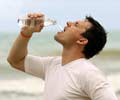
Do you wait until you feel thirsty before drinking water? Thirst indicates some degree of dehydration. This calculator helps you determine the approximate daily water intake needed to avoid dehydration.The water we drink today has been recycled for billions of years, long before life emerged on Earth. It remains the most vital nutrient on our planet. Its absence can usually be lethal within just a few days. Water is essential for life and is important for both our physical and mental function. It is responsible for all our metabolic functions including temperature regulation, nerve conduction, and many chemical reactions. We maintain our normal state of hydration or euhydration by control of both water intake and loss.Strangely the question of optimal intake of water remains elusive and unresolved but an approximate range and avoiding thirst a good indicators to avoid dehydration(1✔).
For example, athletes often require additional fluids due to water loss from intense physical exertion. Similarly, people living in tropical climates may need more water to compensate for increased sweating due to higher temperatures.
Pregnant and breastfeeding women also need to increase their fluid intake to support the needs of their body and their baby's health(2✔). They require additional fluids, including water, ranging from 500 ml to 2 liters per day.
Thirst is a very subjective sensation and helps maintain the body's fluid balance(5✔). Drink water at regular intervals, so that you don't get dehydrated. On average, a sedentary adult should drink 1.5 litres of plain water per day(6✔) however the recommended total daily fluid (water plus other beverages) intake is 3 litres for men and of 2.2 litres for women(7✔). However this recommendation can vary from country to country. For example, in the UK, the recommended total daily water intake is about 2 liters for women and 2.5 liters for men. However, in tropical countries, where people tend to sweat more due to the hotter climate, the recommended water intake is higher. Furthermore, global warming is impacting our hydration needs, as rising temperatures may increase the body's demand for fluids. One consequence of inadequate fluid intake, exacerbated by global warming, is an increased incidence of kidney stone formation(8✔)Top 7 Reasons You Could be Excessively Thirsty
1. Strange Properties of Water(15✔)
Concentration, memory, and critical thinking decline when the body loses more than 2% of its water.(14✔).
Severe Water Loss (22-30% loss of total body water) can cause coma or even death.
How Many Ounces in a Pound?
There are 16 ounces (oz) in 1 pound (lb).One pound equals exactly 16 ounces in the U.S. customary system of measurement, which is widely used in cooking, baking, and weight conversions.Using Bottles to Track Water Intake – Liters & Ounces Conversion
Many people use bottles to keep track of their daily water intake. Since bottles are labeled in either liters (L) or ounces (fl oz) depending on the country, knowing the conversion helps you stay on top of your hydration goals.- A 500 ml (0.5 L) bottle = 16.9 US fl oz (about the size of a standard small water bottle).
- A 1 liter bottle = 33.8 US fl oz (around 2 standard bottles).
- A 2 liter bottle = 67.6 US fl oz (common soda bottle size).
- A 1 gallon (128 oz) jug = 3.78 liters (often used for daily hydration challenges).
Recommended Daily Water Intake
The recommended amount of water varies significantly based on factors such as age, gender, body size, daily activity level, and the environmental conditions.For example, athletes often require additional fluids due to water loss from intense physical exertion. Similarly, people living in tropical climates may need more water to compensate for increased sweating due to higher temperatures.
Pregnant and breastfeeding women also need to increase their fluid intake to support the needs of their body and their baby's health(2✔). They require additional fluids, including water, ranging from 500 ml to 2 liters per day.
Thirst Sensation and Water Intake
Thirst does not signal a decrease in your body's water level; rather, it serves as an alert that you're already dehydrated and should hydrate promptly. When you start feeling thirsty, it means your body has already lost between 1 to 2 percent of its water(3✔,4✔).Thirst is a very subjective sensation and helps maintain the body's fluid balance(5✔). Drink water at regular intervals, so that you don't get dehydrated. On average, a sedentary adult should drink 1.5 litres of plain water per day(6✔) however the recommended total daily fluid (water plus other beverages) intake is 3 litres for men and of 2.2 litres for women(7✔). However this recommendation can vary from country to country. For example, in the UK, the recommended total daily water intake is about 2 liters for women and 2.5 liters for men. However, in tropical countries, where people tend to sweat more due to the hotter climate, the recommended water intake is higher. Furthermore, global warming is impacting our hydration needs, as rising temperatures may increase the body's demand for fluids. One consequence of inadequate fluid intake, exacerbated by global warming, is an increased incidence of kidney stone formation(8✔)
10 Amazing Water Facts That Shows Why Water is Essential for Life
Water has long baffled scientists because of its many unusual properties. It exists in three forms-liquid, gas, and solid-and each form has its own unique characteristics. Here are some fascinating facts about why water is important for life:1. Strange Properties of Water(15✔)
- Recycled through time: The water you drink today is the same water dinosaurs drank-constantly recycled through the planet.
- Ice floats: Water expands by about 9% when frozen, making ice less dense than liquid water.
- Heaviest at 4°C: Water is densest at 4°C, not at 0°C.
- Life-saving quirk: Cold water rises as ice and warmer water sinks, preventing oceans and lakes from freezing solid-allowing marine life to survive under the ice.
2. Water: Earth's Ultimate Regulator
Water is a master regulator: it not only controls the Earth's climate and temperature but also helps maintain body temperature of humans and animals.3. Water in the Human Body
The human body is composed of almost 60-70% water.(9✔)4. Water in Living Things
About 75% of the human brain is water-and so is roughly 75% of a living tree.5. Tea, Coffee & Alcohol Myths
Small amounts of tea, coffee, or alcohol do not cause dehydration, as once believed.(10✔)6. Drink Before You Eat
A glass of water before a meal can help control weight and protect the stomach wall from digestive acids.(11✔)7. Water & Weight Loss
Adequate hydration helps you lose weight, stay active, and prevent heart disease-because without water, the body can't metabolize fat properly.(12✔)8. Signs of Dehydration & Severe Water Loss
Headache, stomach ache, mood changes, and depression can be symptoms of dehydration.(13✔)Concentration, memory, and critical thinking decline when the body loses more than 2% of its water.(14✔).
Severe Water Loss (22-30% loss of total body water) can cause coma or even death.
9. Bottled Water Facts
Packaged drinking water has an expiry date.10. The Scarcity of Fresh Water
Nearly 97% of the world's water is salty or otherwise undrinkable. Another 2% is trapped in ice caps and glaciers. That leaves barely 1% to meet all of humanity's needs-agriculture, homes, industries, communities, and personal use combined.FAQs:
1. How much water should I drink a day?
The recommended daily intake of water is 3 liters, or 100 ounces, for men, and 2.2 liters, or 77 ounces, for women.(16✔).
2. How much water should I drink to lose weight?
Water intake itself may not assist in losing weight but if combined with restriction of calories then according to several studies, consuming 2 cups of water approximately 20 to 30 minutes before your meal makes you feel full and hence may help in weight loss(17✔).
3. How much water should I drink based on my weight?
The average person needs to drink around half of their weight (in pounds) in ounces. For example, a 200-pound individual needs around 100 ounces (3000 ml) of water daily(18✔).
4. What are the benefits of drinking the required amount of water?
The benefits of drinking the required amount of water include boosting energy and reducing tiredness, helping with hydration, flushing out toxins, improving skin texture, and maintaining stability(19✔).
5. How much water should my child drink?
Children aged 1-3 require around 4 cups of liquid per day, which includes water or milk. This increases to about 5 cups for 4-8 year olds and 7-8 cups for older children(20✔).
6. What percentage of our daily water comes from drinks or beverages other than water?
In a review of sixty-five studies from 2000 to 2013, it was noted that plain water contributed up to 58%, 75%, and 80% of the total beverage intake in children, adolescents, and adults, respectively.
Children consumed more milk, while adolescents had a higher intake of soft drinks. In contrast, adults tended to consume more tea, coffee, and alcoholic beverages(21✔).
7. Can excessive drinking of water be harmful?
Yes, excessive drinking of water over several days can be harmful and, in extreme situations, may lead to water intoxication, especially if someone drinks 10 to 15 liters of water a day for several days. However, this is unusual if kidney function is normal, as healthy kidneys can typically process a significant amount of water. Still, it's important to be aware of the risks of over-hydration(22✔).
8. What are the symptoms and signs of water intoxication?
Water intoxication can cause vague symptoms like altered mental status, disorientation, confusion, nausea, and vomiting which may resemble psychosis(23✔).
9. Can I form kidney stones if I don't drink enough water or fluids?
Low water and overall fluid intake can lead to an increased risk of stone formation. Current guidelines recommend drinking enough fluids to produce at least 2.5 L of urine daily(24✔).
10. How many bottles of water should you drink a day?
For women aiming for around 2.2 liters a day, that's about 4-5 bottles (16.9 ounces for each bottle).
Men targeting 3 liters can aim for 6 bottles per day.
Adjust based on personal factors like activity level and climate.
11. How to calculate the minimum daily water intake?
The general guideline for estimating minimum daily water intake is to multiply your body weight( in kilograms) by 0.03.
For example, someone weighing 70 kilograms (Daily Water Intake=70x0.03=2.1 liters) should
aim for a minimum of around 2.1 liters of water per day as per the calculation. However, the average intake should be 3 liters for men and 2.2 liters for women.
Keep in mind that individual factors such as activity level and climate can influence hydration
needs(25✔).
12. How many ounces of water are in a glass?
A standard glass contains 8 ounces, and one gallon equals sixteen glasses (each glass has 8
ounces) of water. For daily intake, the general guidelines recommend around 8 glasses or 64
ounces for water.
Ounces to liters conversion:
8 ounces of water is approximately 0.24 liters(26✔).
13. How can I easily calculate my minimum daily water requirement?
Begin by noting your weight in pounds. Then, multiply your weight by 0.67 (⅔) to establish your minimum daily water requirement.
Formula: 0.67 x Weight in Pounds(27✔).
14. How should one modify their water intake based on their level of physical activity or exercise?
To adapt your water intake based on physical activity, add 12 ounces of water to your daily total for every 30 minutes of exercise. This adjustment compensates for water loss through sweat, ensuring proper hydration.(28✔).
15. How much water does an average person consume over different periods of their life, including monthly, annually, and over an average lifetime of 80 years?
An average human being drinks approximately:
- 90 liters (3,043.26 ounces) of water in a month,
- 1,095 liters (37,026.33 ounces) of water in a year, and
- 87,600 liters (2,962,106.4 ounces) of water in a lifetime, assuming an average lifespan of 80 years.
16. How much water do we need for daily for showering, bathing, Face and hand washing?
To estimate the amount of water used daily, monthly, and yearly for washing and bathing, let's use some average figures for common activities.
- Showering: On average, a shower uses about 10 liters (2.64 gallons) of water per minute. A 10-minute shower, therefore, uses 100 liters.
- Bathing: A full bathtub requires about 150 liters (39.6 gallons) of water
- Handwashing: It's estimated that washing hands uses about 1 liter (0.26 gallons) of water per wash, assuming the tap runs for approximately 20 seconds.
- Face and hand washing: Let's allocate 5 liters per day for miscellaneous washing.
17. How much water do we need daily, monthly or yearly for washing and bathing?
Let's calculate the total daily, monthly, and yearly water usage for an average person's washing and bathing needs.
For washing and bathing, an average person uses approximately:
- Daily: 110 liters (3,719.54 ounces) of water
- Monthly: 3,300 liters (111,586.2 ounces) of water
- Yearly: 40,150 liters (1,357,632.1 ounces) of water
18. How much water can Elephant Drink?
While humans rely heavily on water for survival, the animal kingdom presents some fascinating extremes in water usage. One intriguing example is the elephant, which is among the largest consumers of water in the animal kingdom. An adult elephant can drink up to 200 liters (approximately 6,800 ounces) of water in a single day. This high consumption is necessary to support its massive size, dietary needs, and to maintain hydration in often hot habitats.
19. How much water does a camel need ?
when it comes to efficiency and minimal water use, the camel is an iconic example. Camels are renowned for their ability to go for days or even weeks without drinking water, thanks to their ability to conserve water and their bodies' efficient use of moisture from the food they eat. This adaptation is crucial for survival in the arid desert environments they often inhabit.
20. How old is the water that we drink?
It is over 4.5 billion years old. Scientist have concluded that most of the water we drink formed during the early formation of the Solar System. In other words, it is older than Earth and Sun itself !!

















does age matter? I'm below 18 by a lot and idk if this is the right amount.