- Overview general anesthesia - (https://www.mayoclinic.org/tests-procedures/anesthesia/home/ovc-20163578)
About General Anesthesia
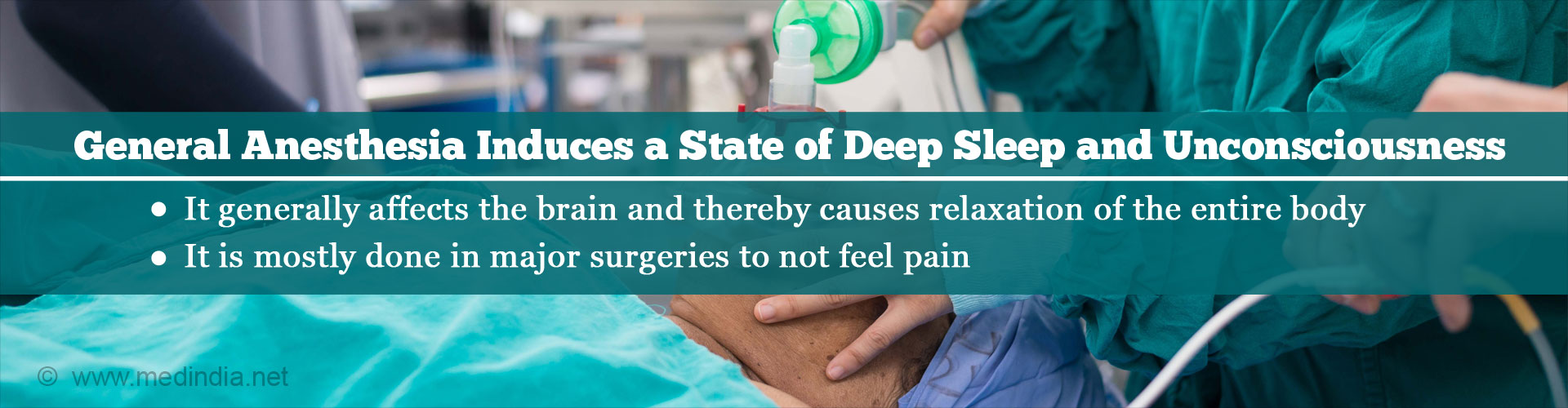
General anesthesia is an assistive procedure to a surgery that is done to induce a state of deep sleep and unconsciousness in the patient. It involves administering certain medications so the patient is unaware of the pain that accompanies the surgery. Anesthetic agents are known to affect multiple sites in the central nervous system in order to cause loss of pain signals and reflexes that occurs once they are given.
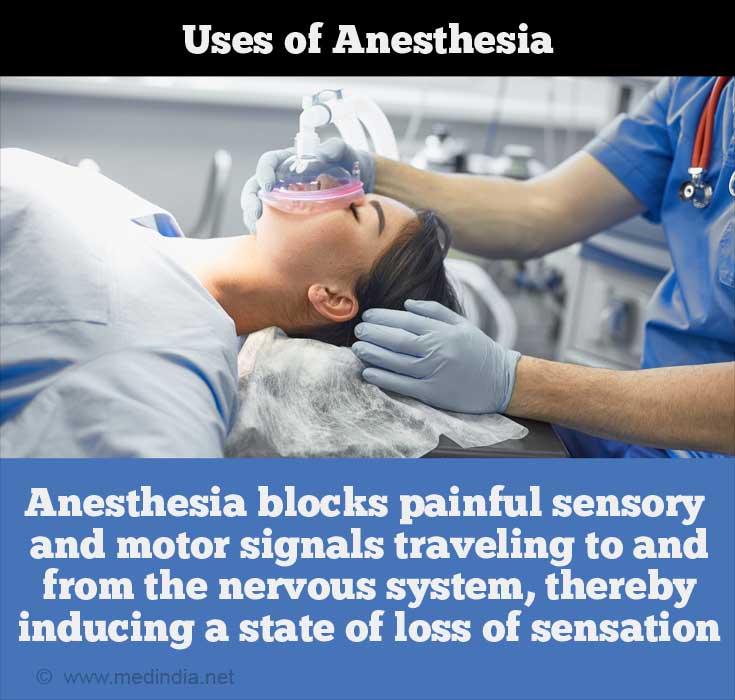
The word "anesthesia" comes from a Greek word meaning “no feeling.” Different techniques of anesthesia can be used depending on the complexity of the procedure. Hence, the type of anesthesia depends on whether it is as major as a heart surgery or an ultra short procedure such as tooth extraction. Anesthesia blocks painful sensory and motor signals traveling to and from the nervous system and thereby induces a state of loss of sensation.
The type of anesthesia that is to be delivered will mainly depend on:
- The general health condition of the patient
- The location of surgery and its anticipated risks
A careful consultation with the anesthetist and surgeon can help determine the type of anesthesia that is required for a particular procedure.
General anesthesia is usually administered when there is a need for more extensive surgery. This form of anesthesia is nothing more than putting a patient to sleep until the surgery is over. While this is being done, the patient’s vital signs such as heart rate, blood pressure, urine output and cardiac function are constantly monitored.
General anesthesia is usually administered intravenously or through inhalation or a combination of both. From the time the anesthesia is given, the patient will not be in a conscious state and hence will not be aware of anything during the surgery. Following this, a curved tube called the endotracheal tube or the breathing tube is placed into the windpipe.
The tube is connected to a ventilator or an anesthesia machine that delivers oxygen and removes carbon-dioxide from the lungs. The set up ensures the continuous delivery of oxygen and anesthetic gases. The ventilator monitor can be used to determine whether the tube is properly positioned and whether adequate ventilation is provided throughout the surgery.

During the entire surgical procedure the heart rate, blood pressure and the oxygen level in blood are evaluated through monitors.
What are Some of the Anesthetic Agents Used During a Surgery?
Inhalation anesthetics are either volatile liquids or gases that are delivered via an anesthesia machine where oxygen, the anesthetic agent and ambient air are combined before delivering. Some compounds that are still in widespread use today are:
Advertisement
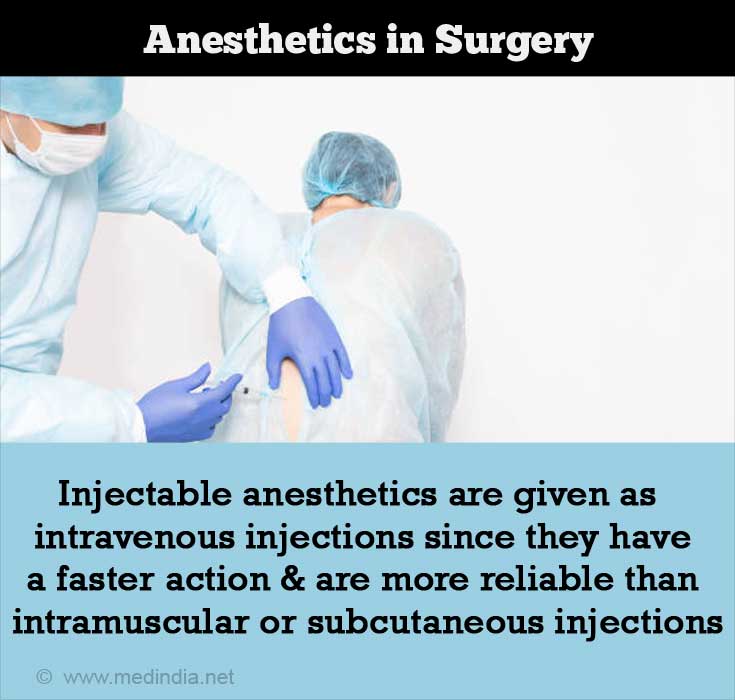
Injectable anaesthetics are mostly given as intravenous injections since they have a faster action and are more reliable than intramuscular or subcutaneous injections. Some widely used drugs are:
- Propofol
- Barbiturates such as methohexital and thiopentone
- Etomidate
- Ketamine
Benzodiazepines such as midazolam are sedatives that are used in combinations with other general anesthetics.
What Happens Following the Operation?
At the end of the surgery, the anesthesiologist essentially reverses the effects of the anesthetic drugs.
Following surgery, the patient is allowed to wake up and the tube is taken out only after the anaesthetist is reassured that they can breathe on their own.
Following this, the patient is shifted to the recovery room where all the vital signs are monitored. Nurses will be there to assist in case of any need. Usually, after an hour or so, the patient will be shifted back to a general ward.
The nurses and the doctors in the ward will provide instructions regarding the precautions to be taken and give other advice regarding food and medication.
It is best to avoid solid foods on the day of the surgery; in some cases the patient will be allowed to sip fluids once they are back in the ward. However, if they have nausea this is best avoided.
Advertisement
What are the Risks Involved in Anesthesia?
With improvements in the field of medicine and technology, anesthesia is a very safe procedure. The risks can be minimized in most of the cases.
It is very important to communicate any previous history of kidney, heart or lung problem, stroke, smoking, alcohol status, previous blood transfusions, high blood pressure, diabetes, jaundice and other psychiatric disorders if any to the doctor. A report of previous surgery and anesthetic experience would also be very valuable. The doctor can then decide accordingly depending on whether there has been an allergic reaction to a particular anesthetic medication before or not. Information on dentures or other artificial implants would be critical.
The medication that one is taking can either increase or decrease the risk of blood loss during surgery. For example, the drug aspirin can increase bleeding complications during surgery. This may need to be stopped a few days prior to the surgery.
If all the points mentioned above are carefully examined, then the risk is very minimum. In some rare cases, allergic reactions to the administered drugs may occur. However, the medical team is well equipped to tackle any emergency. Usually, a small initial dose is given to check for such allergies before the entire medicine is used.
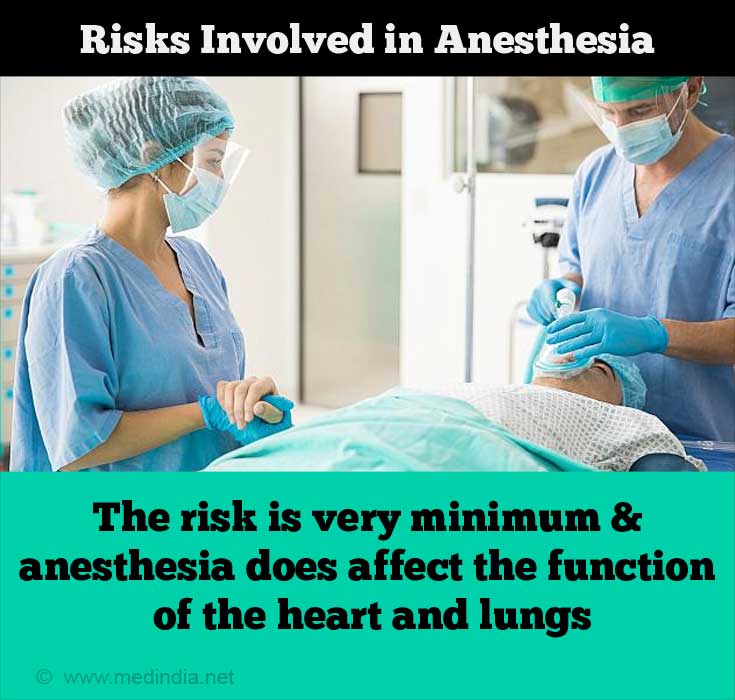
Anesthesia does affect the function of the heart and lungs and there can be unfortunate cases where a person is more susceptible and can end up having a major complication. However this is a very rare event.
Post Operative Recovery and Complications
Most people do not experience any problems following surgery and anesthesia. Serious complications of an anesthetic are very rare.
Minor and temporary side effects may be experienced in some cases. This will again depend upon the surgery performed and the overall health status of the individual.
Drowsiness: A feeling of drowsiness is not uncommon following anesthetic administration. It wears off quickly following the surgery.
Pain and discomfort: A mild discomfort at the site of the surgery is usually felt in some cases. This can be effectively managed by medications used for pain relief.
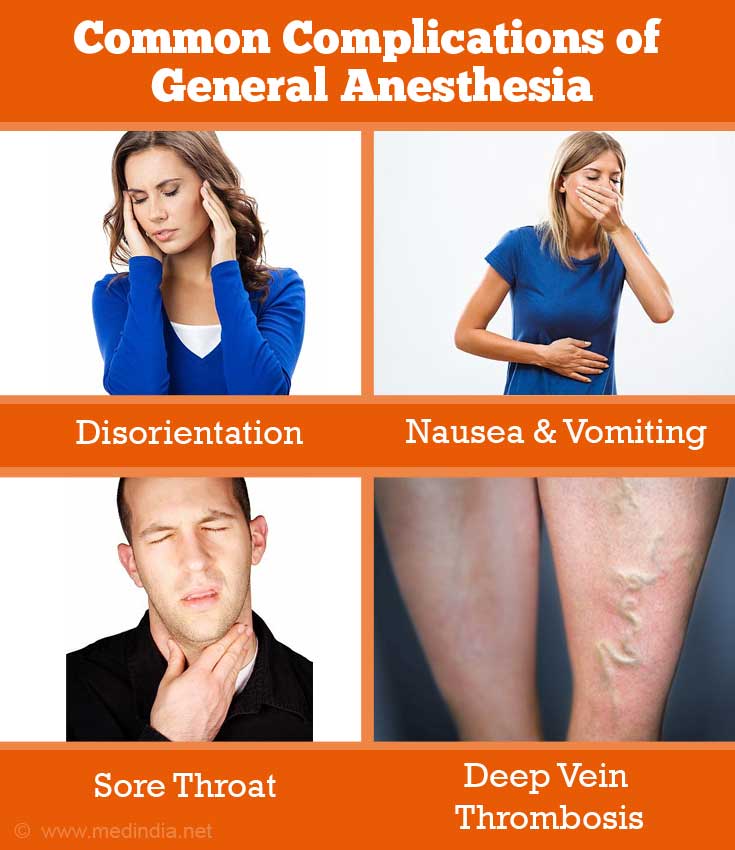
Nausea and vomiting: As a result of modern anesthetic drugs, nausea and vomiting after an operation are sometimes more common.
However, there is an answer to all the above common complications with improved patient care. Complications are more likely to occur when anesthesia is given for a prolonged period in major surgeries.
Advertisement
Chest Infection: This is more likely if there is a long operation in the chest or abdomen regions. Early mobilisation and chest physiotherapy can help in overcoming the problems.
Deep Vein Thrombosis: This is another complication that can occur due to the stasis / stagnancy of blood in the lower limbs and the blood clotting in the veins. To prevent this, early mobilisation is advised. Even when in the bed the patient should move their toes and limbs to improve the circulation.