MEDINDIA
 English
 हिन्दी
 Español
 français
 中文
中文
Global warming is the long-term rise in Earth's average temperature due to human activities.
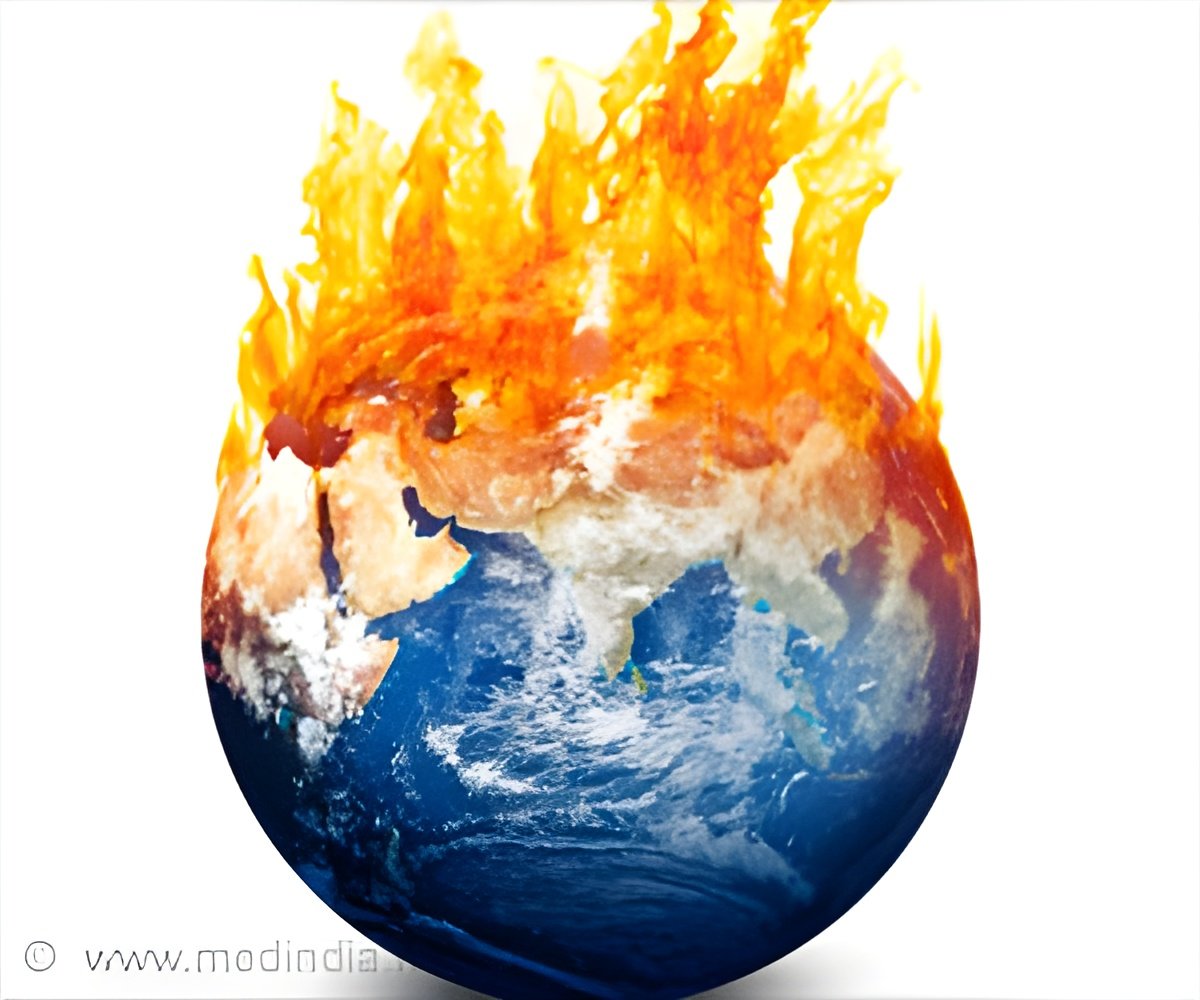
Health Effects of Global Warming
Greenhouse effect causes excessive heat to build up in the earth’s atmosphere causing global warming and affects the environment and health.
Greenhouse effect causes excessive heat to build up in the earth’s atmosphere causing global warming and affects the environment and health.
TOP INSIGHT

A stark warning: Even if global temperatures stabilized now, the world is projected to lose ~40% of its #glaciers. The #climate_crisis demands urgent action. #ClimateChange #GlacierLoss #GlobalWarming
In all scenarios, the glaciers lose mass rapidly over decades and then continue to melt at a slower pace for centuries — even without additional warming. This long-term response means glaciers will continue to feel the effects of today’s heat far into the future, gradually retreating to higher altitudes before reaching a new equilibrium.
Global Glacier Evolution Over Centuries Using Multiple Models
“One of the key strengths of our study is that we were able, for the first time, to project global glacier evolution over multi-centennial timescales, and did so using eight models instead of one or two,” explains Harry Zekollari. “Most glacier studies stop at 2100, which is problematic when simulating the long-term impact of today’s climate policies, given the long-term response of glaciers over time.”
Quiz on Global Warming
The International Conference on Global Warming (GCGW-2012) will be held in Istanbul, Turkey on July 8-12, 2012. Take this quiz to learn what causes global warming, how it can affect your health, and what can be your contribution to contain it. ...
The International Conference on Global Warming (GCGW-2012) will be held in Istanbul, Turkey on July 8-12, 2012. Take this quiz to learn what causes global warming, how it can affect your health, and what can be your contribution to contain it. ...
"Glaciers are good indicators of climate change because their retreat allows us to see with our own eyes how climate is changing. However, since they adjust over longer timescales, their current size vastly understates the magnitude of climate change that has already happened. The situation for glaciers is actually far worse than visible in the mountains today," says co-lead author Lilian Schuster from the University of Innsbruck.
Rising Levels of Carbon Dioxide in the Earth's Atmosphere Will Melt World's Glaciers
The only factor that explains glaciers melting all around the world in unison during the end of the Ice Age is the rise in greenhouse gases.
The only factor that explains glaciers melting all around the world in unison during the end of the Ice Age is the rise in greenhouse gases.
“These effects underscore the critical importance of present-day climate policies,” says Harry Zekollari. “Our study makes it painfully clear that every fraction of a degree matters. If we manage to limit global warming to +1.5°C instead of +2.7°C, we could still save twice as much glacier ice.”

Everest Glaciers Thinning at an Alarming Rate
Glaciers on Mount Everest are losing ice and thinning at an alarming rate. Glaciers make a significant contribution to water resources.
Glaciers on Mount Everest are losing ice and thinning at an alarming rate. Glaciers make a significant contribution to water resources.
“This study is a major contribution to the United Nations International Year of Glaciers' Preservation, emphasizing the urgent need for global climate action to protect the world’s glaciers,” says Daniel Farinotti, Professor of Glaciology at ETH Zurich and the Swiss Federal Institute for Forest, Snow and Landscape Research WSL.
His research group at the Laboratory of Hydraulics, Hydrology and Glaciology (VAW) played a central role in producing the new findings. The entire study led by Zekollari and Schuster was conducted as part of the Glacier Model Intercomparison Project (GlacierMIP) and coordinated by the Climate and Cryosphere (CliC) Project of the World Climate Research Programme (WCRP).
Farinotti notes that the release of the Science study coincides with the opening of the High-Level International Conference on Glaciers' Preservation, initiated by the President of Tajikistan through the United Nations (UN) Resolution that established both the UN Year of Glaciers' Preservation and, later, the UN Decade of Action for the Cryospheric Sciences 2025-2034.
On the Swiss side, the Federal Department of Foreign Affairs (FDFA) was invited to support the organization of the event, particularly in drafting what is intended to become the "Dushanbe Glacier Declaration". Daniel Farinotti, for his part, is acting as an advisor to the FDFA in the preparation of the declaration.
Source-Eurekalert
 Email
Email