MEDINDIA
 English
 हिन्दी
 Español
 français
 中文
中文
Strong Foundations, a digital fall prevention program, significantly improves balance, posture, and strength in older adults—all from home! Stay strong, stay steady, and stop falls before they start.
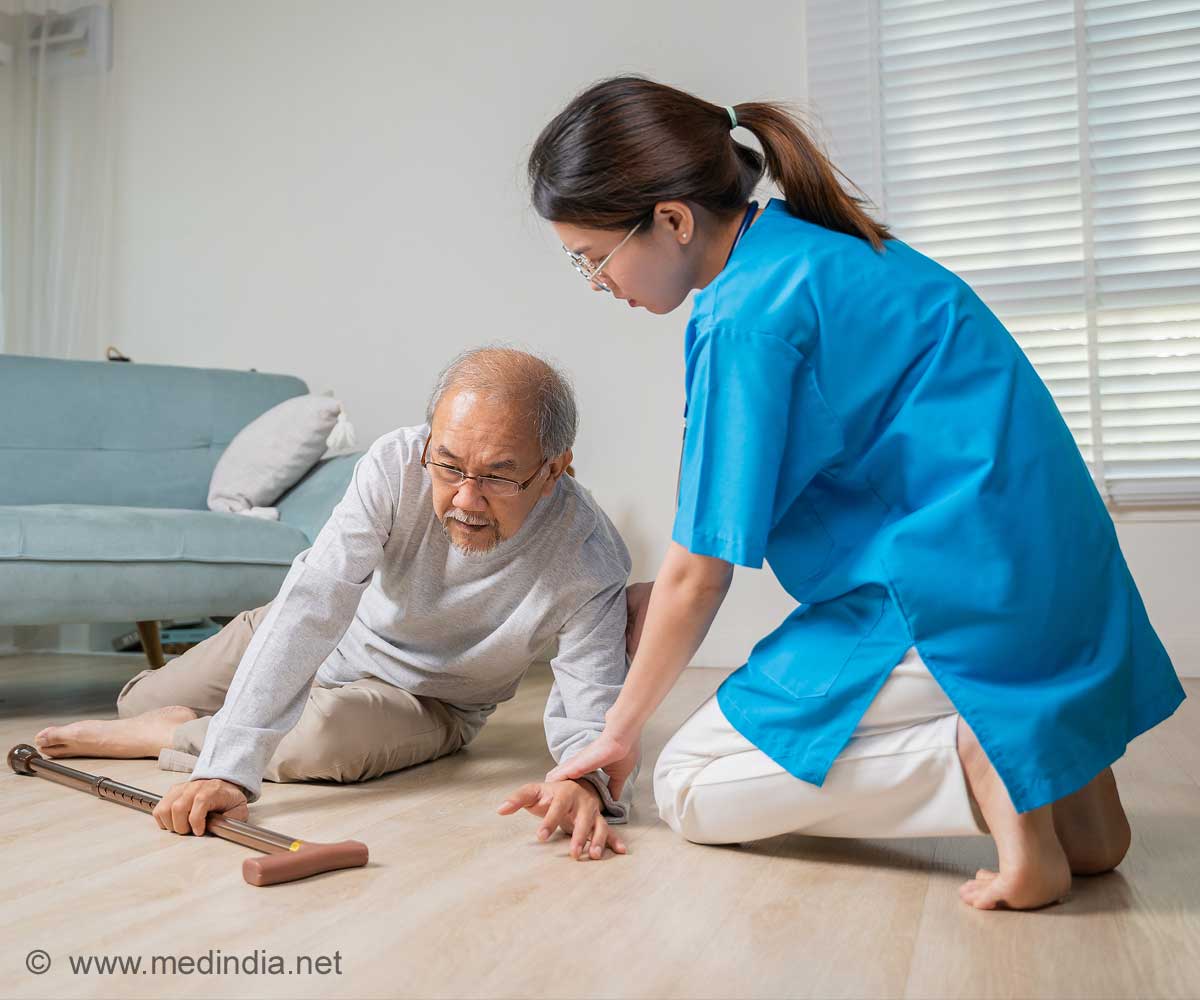
Building Strong Foundations: Nonrandomized Interventional Study of a Novel, Digitally Delivered Fall Prevention Program for Older Adults
Go to source).

Preventing Falls in Older Adults: The Importance of Home Safety
Lower the risk of falls in the elderly by assessing and reducing fall hazards. Simple measures like removing clutter, adding handrails and non-slip strips to steps can help
Lower the risk of falls in the elderly by assessing and reducing fall hazards. Simple measures like removing clutter, adding handrails and non-slip strips to steps can help
TOP INSIGHT

Did You Know?
Almost one in four adults over 65 experiences a fall each year, making falls the leading cause of accidental death and mobility-related disability among seniors. #fallrisk #strongfoundation #medindia
Strong Foundations: Fall Prevention for Seniors at Home
“This study showcases the potential of accessible, online exercise programs to significantly enhance physical function for older adults,” said Ryan Moran, M.D., M.P.H., associate clinical professor at UC San Diego School of Medicine. “Online delivery of exercise interventions offers some exciting and enticing prospects, as not only can this platform eliminate barriers related to difficulty with transportation and concerns about participating in conventional gym environments, it can also bring highly qualified experts to individuals who are most in need, and do so safely.”
New Simple Test can Predict and Prevent Falls in Elderly
Simple clinical test that can assess the lower limb strength of patients has been developed. This test helps to predict and prevent their risk of falls.
Simple clinical test that can assess the lower limb strength of patients has been developed. This test helps to predict and prevent their risk of falls.
A Fall Today Means a Struggle Tomorrow!
Falls are the leading cause of accidental death and mobility-related disability among older adults, with 1 in 4 individuals over age 65 experiencing a fall annually. These risks are exacerbated in rural areas, where access to traditional exercise facilities is limited. The Strong Foundations program addresses these challenges by providing a safe, structured exercise regimen accessible from participants’ homes.
Falls Or Slips are Increasing in Women Over the Age of 40: Study
A sharp increase in falls or slips have been found in women who are just over 40, finds a new study.
A sharp increase in falls or slips have been found in women who are just over 40, finds a new study.
Preventing Falls in Older Adults
The once weekly (60 minutes),12-week online program combines postural alignment, balance exercises and strength training. One of the novel features of the program is the delivery of semi-individualized instruction in real time within a small group setting. Semi-individualized instruction is attention given to an individual within the group course designed to correct exercise form.Using a quasi-experimental design, the study included 92 participants — aged 60 and older — who were stratified by fall risk level using the Centers for Disease Control and Prevention’s Stopping Elderly Accidents, Deaths and Injuries (STEADI) questionnaire. A total of 55 low risk and 37 moderate risk participants were recruited. Both low- and moderate-risk groups showed improvements in posture (up to 36% for measures like Occiput to Wall Distance — a measurement used to screen for excessive outward curvature of the spine), physical strength (as indicated by the Chair Stand — the movement of sitting down on a chair and then standing back up), and other metrics. Notably, older adults at moderate fall risk experienced the greatest gains, particularly in posture and physical strength.
“The improvements in posture alone are particularly noteworthy, given their strong correlation with fall risk and overall mobility,” Moran added.
David Wing, M.S., senior clinical research supervisor at the Herbert Wertheim School of Public Health and Human Longevity Science, emphasized the broader implications of the findings: “Our findings clearly demonstrate the potential to deliver an effective fall prevention program for older adults through a technological interface.”
The researchers suggest that future studies explore the possibility of deploying this intervention in populations that are of a lower overall socio-economic status and more remote from the location of intervention deployment. Further, developing these materials into other languages in a culturally appropriate manner could expand the reach to other populations who would benefit from the opportunity to receive at-home fall risk training.
Reference:
- Building Strong Foundations: Nonrandomized Interventional Study of a Novel, Digitally Delivered Fall Prevention Program for Older Adults - (https://aging.jmir.org/2025/1/e68957)
Source-Eurekalert

Chair Yoga Reduces Risk of Falls in Older Adults
Older adults with advanced dementia can now participate in physical activities. A new study suggests that chair yoga helps reduce the risk of falls and improves physical activity in older adults.
Older adults with advanced dementia can now participate in physical activities. A new study suggests that chair yoga helps reduce the risk of falls and improves physical activity in older adults.
 Email
Email